

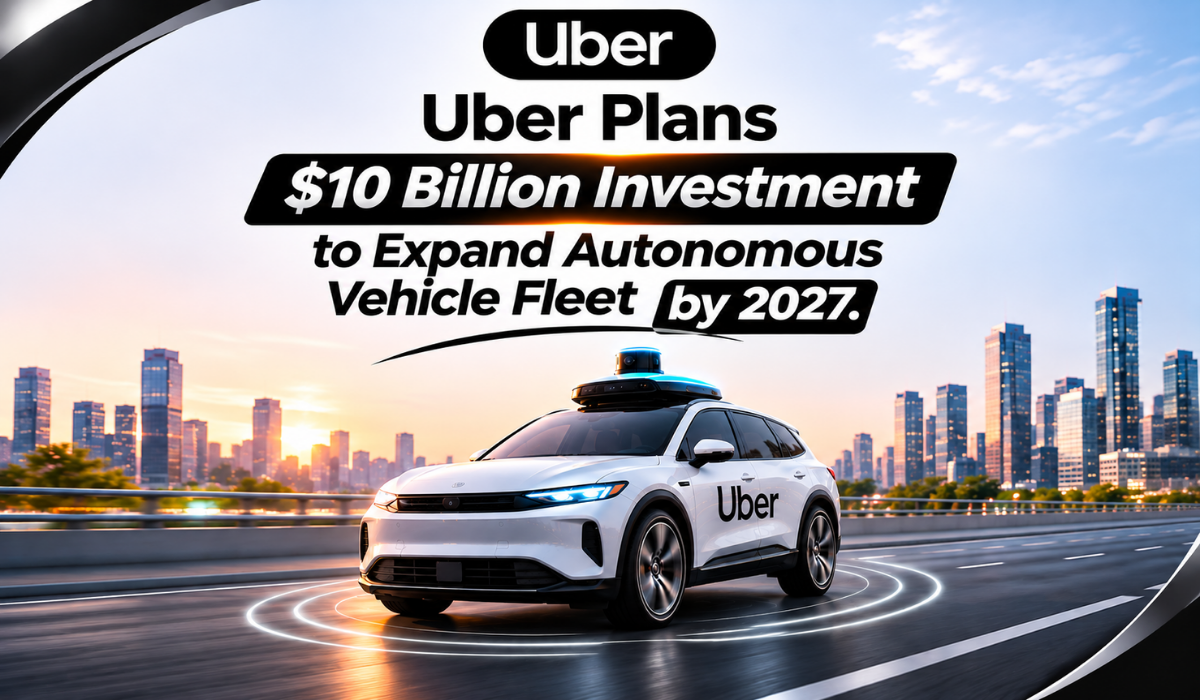
The Uber robotaxi expansion plan is gaining momentum as the company targets more than 2,000 autonomous vehicles on its platform in 2027. Uber plans to invest $10 billion by the end of 2027 to grow its driverless vehicle network, even as its traditional ride-hailing business faces pressure from higher fuel costs and driver shortages.
Uber Robotaxi Expansion Targets 20 Countries
During its third-quarter earnings call, Uber told investors it aims to expand its autonomous vehicle network to more than 2,000 vehicles next year. Around half are expected to serve the United States, with the remainder distributed across Europe, Asia and the Middle East.
By the end of 2027, Uber expects its network to span 20 countries. The Uber robotaxi expansion strategy includes partnerships with autonomous vehicle developers such as May Mobility, Momenta, Zoox and Motional.
Chief executive Dara Khosrowshahi said the company was on track to have 700 robotaxis on the road by the end of 2026. Uber also has a longer-term ambition to deploy 12,000 vehicles, although it has not announced a specific completion date for that target.
$10 Billion Investment Supports Autonomous Mobility Plans
Uber’s planned $10 billion spending through the end of 2027 highlights the scale of its ambitions in autonomous transportation.
The company is working with multiple technology partners rather than relying on a single autonomous vehicle developer. This approach could help Uber expand into different markets and offer access to various driverless vehicle technologies.
However, these figures represent future plans, not completed deployments. The expansion will depend on regulatory approvals, vehicle availability, technology readiness and the ability of partners to scale their operations.
Uber’s Q3 Results Show Pressure on Mobility Revenue
The Uber robotaxi expansion announcement came alongside the company’s third-quarter financial results. Group revenue reached $14.8 billion, exceeding analysts’ expectations by approximately $100 million.
However, the Mobility business generated around $7.5 billion, approximately $200 million below analyst expectations. Mobility revenue also declined 2% year over year.
Uber reported GAAP operating income of approximately $1.4 billion, below the $2.2 billion analyst expectation cited in the supplied report. These figures should be distinguished from non-GAAP operating income, which uses a different accounting measure.
The report also stated that Uber set aside $484 million for potential legal and tax settlements. This is a reported provision, not a confirmed settlement payment.
Fuel Prices and Driver Shortages Affect Ride-Hailing Growth
Uber attributed some of the pressure on its Mobility business to higher fuel prices, tighter labour conditions and competition for drivers in international markets.
Khosrowshahi said elevated fuel costs, driven by conflict in the Middle East, had affected growth. He added that limited driver availability had prevented the company from fully meeting consumer demand in several markets.
Uber expects these challenges to become more significant in the fourth quarter. Higher operating costs and difficulty attracting enough drivers could continue to affect its traditional ride-hailing operations.
Conclusion
The Uber robotaxi expansion highlights the company’s intention to make autonomous transportation a larger part of its global business. Its partnerships and planned investment could support growth across multiple countries, but the targets will depend on regulatory approval, technology readiness and commercial viability.
At the same time, pressure on Mobility revenue and driver availability shows that Uber must continue addressing challenges in its existing business. Its progress will depend on how effectively it balances current ride-hailing operations with its longer-term autonomous vehicle ambitions.