

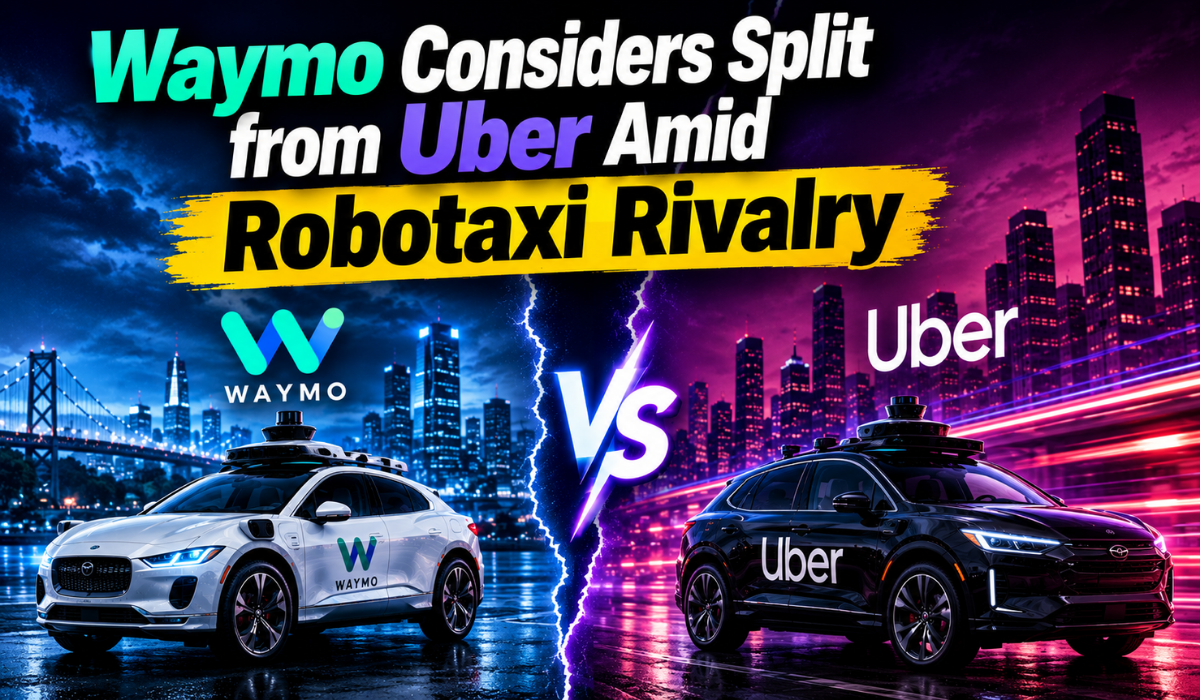
The Waymo Uber partnership has become one of the most closely watched collaborations in the autonomous mobility industry. By combining Waymo’s self-driving technology with Uber’s established ride-hailing platform, the companies helped introduce robotaxi services to more customers and accelerated the adoption of autonomous transportation.
Recent reports, however, suggest that Waymo is reassessing how it wants to grow its robotaxi business in the future. While neither company has announced that their partnership is ending, the reported developments indicate that Waymo is exploring a greater focus on its own booking platform as competition within the robotaxi industry continues to increase.
The situation reflects a broader trend across the autonomous vehicle market, where companies are balancing partnerships with the desire to build stronger direct relationships with customers.
Key Takeaways
| Highlights |
| The Waymo Uber partnership remains active, but its long-term direction is reportedly under review. |
| Waymo is exploring ways to strengthen its direct booking strategy. |
| Uber continues to expand its autonomous mobility business through multiple partnerships. |
| Competition in the robotaxi industry is becoming increasingly intense. |
| Regulatory decisions and customer experience are expected to shape future growth. |
How the Waymo Uber Partnership Changed Autonomous Mobility
When Waymo and Uber began working together, the partnership represented a practical approach to expanding autonomous ride-hailing services.
Waymo contributed years of experience in autonomous driving technology, while Uber offered a widely used ride-hailing platform capable of connecting millions of riders with transportation services.
This combination allowed autonomous vehicles to reach more users without requiring Waymo to rapidly build its own customer network in every market.
As the robotaxi market develops, however, companies are increasingly looking beyond technology alone. Customer relationships, operational control, and service quality have become just as important as autonomous driving capabilities.
Why Reports Suggest the Partnership Could Evolve
According to reports, Waymo is evaluating how its long-term strategy should develop as autonomous transportation becomes more commercially viable.
People familiar with the matter reportedly say both companies have different priorities regarding customer ownership, operational responsibilities, and future expansion plans. Neither company has publicly confirmed every reported detail, but the discussion highlights how quickly the robotaxi industry is evolving.
Rather than relying exclusively on external platforms, Waymo appears to be considering a future where it has a stronger direct connection with customers through its own services.
This does not necessarily mean the Waymo Uber partnership will end immediately. Instead, it reflects how companies often reassess partnerships as markets mature.
Waymo vs Uber: A Comparison of Their Strategies
| Category | Waymo | Uber |
| Core Business | Autonomous driving technology and robotaxi operations | Global ride-hailing platform |
| Customer Platform | Waymo One | Uber App |
| Technology | Develops proprietary self-driving systems | Partners with autonomous vehicle developers |
| Fleet Operations | Direct management of autonomous vehicles | Integrates multiple autonomous partners |
| Growth Strategy | Expand branded autonomous services | Expand mobility platform through partnerships |
| Long-Term Vision | Build an end-to-end autonomous ecosystem | Offer customers multiple transportation options |
Although both companies support autonomous transportation, this comparison shows that their business models naturally lead to different long-term priorities.
What This Means for Waymo
For Waymo, operating more services directly could provide several strategic advantages.
These include:
- Greater control over the customer experience
- Stronger brand recognition
- More flexibility in pricing decisions
- Direct access to customer feedback
- Improved operational insights from its own fleet
A stronger direct presence may also help Waymo differentiate itself as more companies enter the robotaxi market.
At the same time, partnerships remain valuable for expanding into new cities and reaching larger customer bases.
What This Means for Uber
Uber has consistently positioned itself as a mobility platform rather than an autonomous vehicle developer.
Instead of building self-driving technology internally, the company has partnered with multiple autonomous vehicle companies to bring robotaxi services onto its platform.
Even if the Waymo Uber partnership changes over time, Uber’s broader strategy of working with several technology providers is expected to continue. This diversified approach reduces dependence on a single partner while allowing Uber to expand autonomous ride availability.
Why Customers Could Benefit
For riders, the reported developments are unlikely to result in immediate changes.
Existing services are expected to continue while both companies evaluate future opportunities.
In the longer term, greater competition may provide several advantages:
- More autonomous ride options
- Better customer experience
- Faster innovation
- Wider geographic coverage
- Improved service reliability
Competition often encourages companies to invest more heavily in technology and customer satisfaction, which ultimately benefits users.
Competition Is Driving the Next Phase of Robotaxis
The reported developments surrounding the Waymo Uber partnership reflect a much larger shift within autonomous transportation.
The industry is no longer focused solely on developing reliable self-driving vehicles. Companies are now competing to build trusted brands, improve operational efficiency, attract loyal customers, and expand into new markets.
At the same time, regulators continue developing policies that will influence how robotaxi services operate. Safety standards, licensing requirements, and public acceptance will all play an important role in determining how quickly autonomous transportation becomes part of everyday life.
Looking Ahead
Although reports indicate that Waymo is evaluating the future of its collaboration with Uber, there has been no official confirmation that the partnership will end.
Both companies continue investing heavily in autonomous mobility, and the robotaxi market remains one of the fastest-growing segments within the transportation industry.
Whether the Waymo Uber partnership continues unchanged or gradually evolves, the reported developments demonstrate that the next stage of autonomous mobility will be shaped by innovation, competition, and changing business priorities.
Final Thoughts
The Waymo Uber partnership helped accelerate the commercial adoption of autonomous ride-hailing by bringing together advanced self-driving technology and one of the world’s largest mobility platforms.
As the industry matures, it is natural for companies to review their strategies and determine how best to serve customers while strengthening their competitive positions.
Although the future direction of the partnership remains uncertain, one thing is becoming increasingly clear: robotaxis are moving closer to mainstream adoption. The companies that combine advanced technology, efficient operations, and exceptional customer experiences will be best positioned to lead the next generation of autonomous transportation.
Frequently Asked Questions
Is the Waymo Uber partnership ending?
No official announcement has confirmed that the partnership is ending. Reports indicate that Waymo is evaluating its long-term strategy, while current collaborations continue.
Why is Waymo exploring a stronger direct strategy?
Expanding its own booking platform could allow Waymo to strengthen customer relationships, improve operational control, and build its brand in the growing robotaxi market.
Will Uber continue offering autonomous rides?
Yes. Uber continues to work with autonomous vehicle developers as part of its long-term strategy to expand autonomous ride-hailing services through its platform.